


Introduction
A complicated day isn’t always caused by a major problem. Sometimes it is the result of dozens of small things competing for attention: an overcrowded desk, too many unfinished tasks, scattered digital files, forgotten errands, and routines that require unnecessary effort.
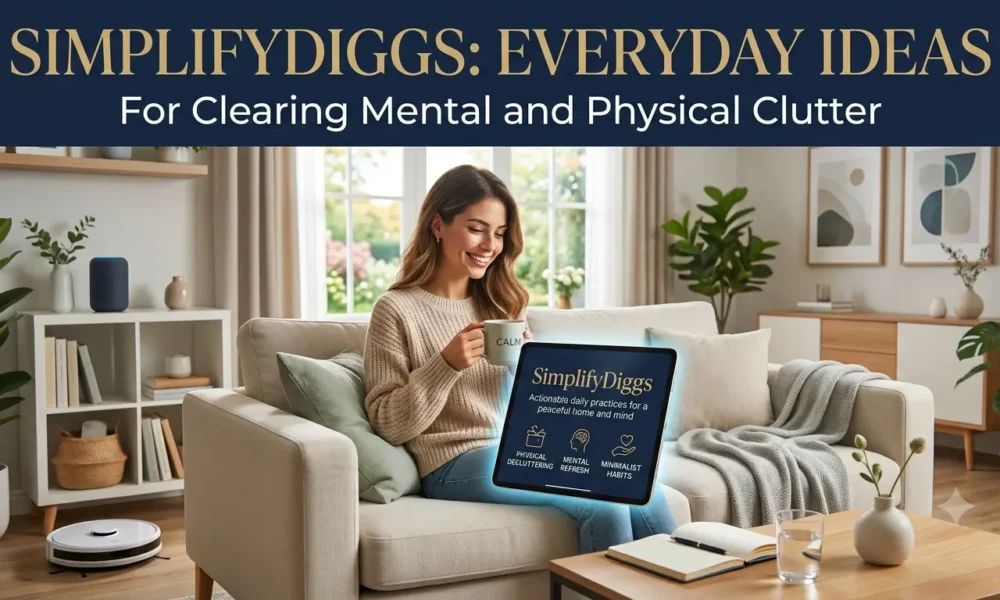
SimplifyDiggs offers a practical way to look at these everyday challenges. Instead of trying to completely redesign your lifestyle, the idea is to identify what creates friction and find a simpler way to handle it.
Simplification can happen in your physical surroundings, schedule, digital life, spending habits, and personal routines. The goal isn’t to remove everything or become perfectly organized. It’s to create systems that are easy to understand and realistic enough to maintain.
What Does SimplifyDiggs Mean?
SimplifyDiggs represents a practical approach to making everyday life easier by reducing unnecessary complexity and improving the way recurring tasks are handled.
The approach can be built around five simple questions:
- What keeps causing unnecessary work?
- Can something be removed?
- Can the process be shortened?
- Can I create a repeatable system?
- Does the new approach actually make life easier?
These questions can be applied to almost any routine.
1. Start With the Things That Annoy You Most
Don’t begin by trying to improve every part of your life.
Look for recurring frustrations.
You might repeatedly:
- Misplace your keys.
- Search through old files.
- Forget small errands.
- Reorganize the same clutter.
- Check several calendars.
- Receive too many notifications.
- Spend too much time deciding what to buy.
These problems may seem minor individually, but recurring friction is a useful place to start simplifying.
2. Remove Before You Add
When something isn’t working, the first instinct is often to add another tool.
A new app.
A new storage box.
Another checklist.
Another reminder.
But sometimes the better question is:
“What can I eliminate?”
You may be able to remove:
- Unused subscriptions
- Unnecessary notifications
- Duplicate files
- Unused belongings
- Repeated steps
- Low-value commitments
Less to manage often means less work.
3. Build Around Your Actual Habits
A system only works if you use it.
Suppose you always enter your home through the same door. That’s probably a practical location for a key or bag storage area.
If you check your calendar every morning, make that part of your existing routine.
If you prefer writing tasks on paper, a notebook may be more useful than forcing yourself to use a complicated digital system.
The best system is the one that fits your behavior.
SimplifyDiggs for Home Organization
Your home doesn’t need to look like a showroom to be organized.
It needs to make everyday activities easier.
4. Give Frequently Used Items a Home
Choose permanent locations for things you use often.
Examples include:
- Keys
- Wallet
- Work bag
- Chargers
- Important documents
- Everyday accessories
The location should be convenient enough that returning the item feels natural.
5. Organize According to Frequency
Consider how often you use an item.
| Usage | Practical Storage |
|---|---|
| Daily | Easy to reach |
| Weekly | Convenient storage |
| Occasional | Less prominent location |
| Rarely | Out-of-the-way storage or reconsider |
This approach makes organization more functional.
6. Focus on Clutter Hotspots
Most homes have certain areas where things naturally accumulate.
Common examples include:
- Kitchen counters
- Desks
- Entryways
- Dining tables
- Bedside tables
Choose one hotspot.
Remove anything that doesn’t belong there.
Then decide where the remaining items should go.
7. Use a Short Evening Reset
A short reset can make tomorrow easier.
Before ending your day:
- Return items to their places.
- Clear your main surface.
- Put away loose papers.
- Check tomorrow’s schedule.
- Prepare one thing you’ll need.
Keep the process short.
It should feel like maintenance, not another major chore.
SimplifyDiggs for Better Daily Routines
A routine should make life easier, not become another source of pressure.
8. Create Simple Morning Defaults
Mornings can involve many small decisions.
Reduce some of them by creating defaults.
For example:
- Keep everyday essentials in one location.
- Have a small set of regular breakfast options.
- Prepare important items the night before.
- Check your schedule at a consistent time.
The goal is to make the first part of the day more predictable.
9. Prepare for Tomorrow
Before finishing your day, ask:
“What can I do now that will make tomorrow easier?”
The answer might be:
- Preparing your work bag
- Checking an appointment
- Organizing your desk
- Choosing what you’ll need
- Writing down an unfinished task
One small preparation step can remove a decision from tomorrow.
10. Create a Simple Task System
Keep your daily priorities somewhere easy to check.
You could use:
- A notebook
- A digital task list
- A calendar
- A simple notes application
You don’t need several systems performing the same job.
Choose something you can maintain consistently.
11. Define the Next Action
Large tasks can feel difficult because they are vague.
Instead of:
“Organize the house.”
Try:
“Clear the kitchen counter.”
Instead of:
“Work on the project.”
Try:
“Review the project outline.”
Specific actions are easier to start.
SimplifyDiggs for Digital Organization
Digital clutter can consume attention even when you don’t notice it.
12. Reduce Unnecessary Notifications
Review the notifications coming from your devices.
Ask:
“Does this need my attention immediately?”
Keep useful alerts.
Reduce unnecessary interruptions where practical.
13. Create a Simple File Structure
You don’t need a complicated folder hierarchy.
For example:
Work
- Current
- Completed
- Reference
Personal
- Documents
- Travel
- Finance
Use categories that make sense for your own needs.
14. Use Clear File Names
File names should help you understand what something is without opening it.
For example:
Monthly-Budget-August
is easier to recognize than:
New-File-Final-3
Consistent naming can make future searches easier.
15. Clean Temporary Digital Spaces
Review one temporary space at a time:
- Downloads
- Screenshots
- Old bookmarks
- Duplicate files
- Unused applications
Don’t turn digital cleanup into a massive project.
Small, repeatable maintenance is often easier.
SimplifyDiggs and Time Management
Simplification also applies to how you spend your time.
16. Choose One Main Priority
At the beginning of the day, identify the responsibility that matters most.
Ask:
“What deserves my attention first?”
Then give that task appropriate attention before getting lost in less important activities.
17. Separate Fixed Commitments From Flexible Tasks
Some activities happen at specific times.
Others can move.
Keep these categories separate.
Fixed
- Appointments
- Meetings
- Classes
- Scheduled events
Flexible
- General errands
- Reading
- Administrative work
- Optional tasks
This can make planning easier.
18. Group Similar Tasks
Handle similar activities together when practical.
For example:
Messages: respond during selected periods.
Errands: combine nearby trips.
Administrative work: process routine paperwork together.
Planning: review upcoming responsibilities during one weekly session.
19. Don’t Fill Every Empty Space
A completely full schedule leaves little room for reality.
Unexpected tasks happen.
Plans change.
You may simply need a break.
Leave some flexibility when possible.
A practical schedule has room to breathe.
SimplifyDiggs and Smarter Shopping
The things you buy become part of your environment and your responsibilities.
20. Ask What a Purchase Solves
Before buying something, ask:
- What problem does it solve?
- Do I already own something similar?
- How often will I use it?
- Where will I store it?
- Will it require maintenance?
If the answer isn’t clear, waiting can be reasonable.
21. Keep One Running Shopping List
Instead of trying to remember household needs, keep one list.
When something runs low, add it.
Before shopping, check the list.
This creates a simple repeatable process.
22. Consider the Cost of Ownership
A product can create responsibilities after purchase.
Think about:
- Storage
- Cleaning
- Charging
- Maintenance
- Replacement
- Organization
The simplest choice isn’t always the cheapest one.
It’s often the option that provides useful value without creating unnecessary future work.
SimplifyDiggs for Work and Study
Simplification can also improve professional and educational routines.
23. Prepare Your Workspace
Keep frequently used materials easy to access.
Remove items that don’t belong in your active workspace.
At the end of a session, return things to their normal locations.
This can make the next session easier to begin.
24. Keep Current Work Separate
If you work with many documents, create a clear distinction between active and finished work.
For example:
- Current
- Completed
- Reference
This makes it easier to identify what actually requires attention.
25. End Each Session With a Note
If you stop working before a task is complete, write down the next action.
For example:
“Next: review the second section.”
When you return, you don’t have to spend time figuring out where to restart.
SimplifyDiggs and Personal Time
Simplification should create space for life outside responsibilities.
26. Decide What You Want More Time For
Ask:
“What would I like to do more often?”
Your answer could be:
- Reading
- Exercise
- Sports
- Cooking
- Music
- Family time
- Travel
- Creative hobbies
- Learning
Once you know what matters, it becomes easier to evaluate how you spend your free time.
27. Make Enjoyable Activities Easier to Start
Reduce preparation.
Keep your current book visible.
Store hobby materials together.
Keep sports equipment accessible.
Prepare your creative workspace.
The easier the first step becomes, the easier it can be to start.
28. Don’t Turn Every Activity Into a Goal
Not everything needs a target.
A hobby can simply be enjoyable.
You don’t have to measure every walk, track every book, or turn every interest into a productivity project.
Enjoyment has value on its own.
A Simple SimplifyDiggs Decision Framework
When you’re unsure what to do, ask five questions:
1. Is it necessary?
If not, consider whether it deserves your attention.
2. Does it provide meaningful value?
Consider usefulness, enjoyment, or importance.
3. Can I make it simpler?
Look for unnecessary steps.
4. What future work will it create?
Think about maintenance, storage, and responsibility.
5. Can I create a default?
Repeated decisions may benefit from a simple personal rule.
A Weekly SimplifyDiggs Check-In
Spend a few minutes reviewing your week.
| Area | Question |
|---|---|
| Home | What created the most clutter? |
| Schedule | What took more time than expected? |
| Digital | What information was difficult to find? |
| Spending | What purchases were genuinely useful? |
| Work | What process could be easier? |
| Personal time | What did I enjoy? |
| Next week | What one thing should I simplify? |
Choose one improvement.
Don’t turn the review into another complicated project.
7 SimplifyDiggs Principles to Remember
- Remove before adding.
- Create permanent homes for frequently used items.
- Build systems around actual habits.
- Keep recurring processes simple.
- Reduce unnecessary decisions.
- Protect time for meaningful activities.
- Change systems when they stop working.
These principles can be adapted to different lifestyles and circumstances.
Common Simplification Mistakes
Trying to change everything at once
One useful change is easier to test than ten.
Creating systems that are too complicated
If maintaining the system takes more effort than the original problem, simplify it.
Buying more organization
More storage doesn’t always solve excess.
Organizing for appearance
A system should support your behavior, not just look good.
Removing meaningful things
Simplification isn’t about eliminating everything.
Expecting perfection
A useful system should survive ordinary imperfect days.
Try the 20-Minute SimplifyDiggs Reset
You can begin today.
Minutes 1–5: Identify
Choose one recurring problem.
Minutes 6–9: Understand
Figure out what’s causing it.
Minutes 10–13: Remove
Eliminate one unnecessary step, item, or decision.
Minutes 14–17: Create
Build a simple replacement process.
Minutes 18–20: Test
Use it immediately.
If it makes life easier, keep it.
If it doesn’t, modify it.
Frequently Asked Questions
What is SimplifyDiggs?
SimplifyDiggs is a practical approach to making everyday life easier through organization, simple systems, better routines, and intentional choices. It focuses on reducing unnecessary complexity while preserving useful and meaningful parts of life.
How do I start simplifying my life?
Start with one recurring problem that causes unnecessary frustration. Understand why it happens, remove an unnecessary step, and create a simple process that you can repeat.
Does SimplifyDiggs mean minimalism?
No, SimplifyDiggs does not require minimalism. It is about reducing unnecessary work and clutter while keeping things that are useful, important, or meaningful.
How can I make my home easier to manage?
Give frequently used items permanent locations and organize spaces according to how you actually use them. Start with high-use areas rather than trying to reorganize your entire home at once.
How can I simplify my digital life?
Reduce unnecessary notifications, organize important files, use clear file names, and periodically clean temporary digital spaces. A simple system is usually easier to maintain than a complicated one.
What is one SimplifyDiggs habit I can start today?
Choose one item you frequently misplace and give it a permanent home. Returning it to that location after use can eliminate a small recurring problem.
Conclusion
SimplifyDiggs is about making everyday life easier without making your lifestyle complicated.
You don’t need a complete transformation.
Start by noticing recurring friction.
Remove what isn’t necessary.
Organize what you actually use.
Create simple systems for repeated tasks.
Protect time for things you enjoy.
Then review your systems and change them when your needs change.
The most effective improvements are often small enough to become ordinary habits.
Simplify what you can, organize what matters, and create more room for the life you actually want to live.

Other Articles

GlossyWise: Everyday Systems for a More Organized Life.
No Comment! Be the first one.